Ribbon Blender
Ribbon blenders use inner and outer helical ribbons on a horizontal shaft to move material in both directions at once, achieving fast, uniform blending of dry powders and granules.
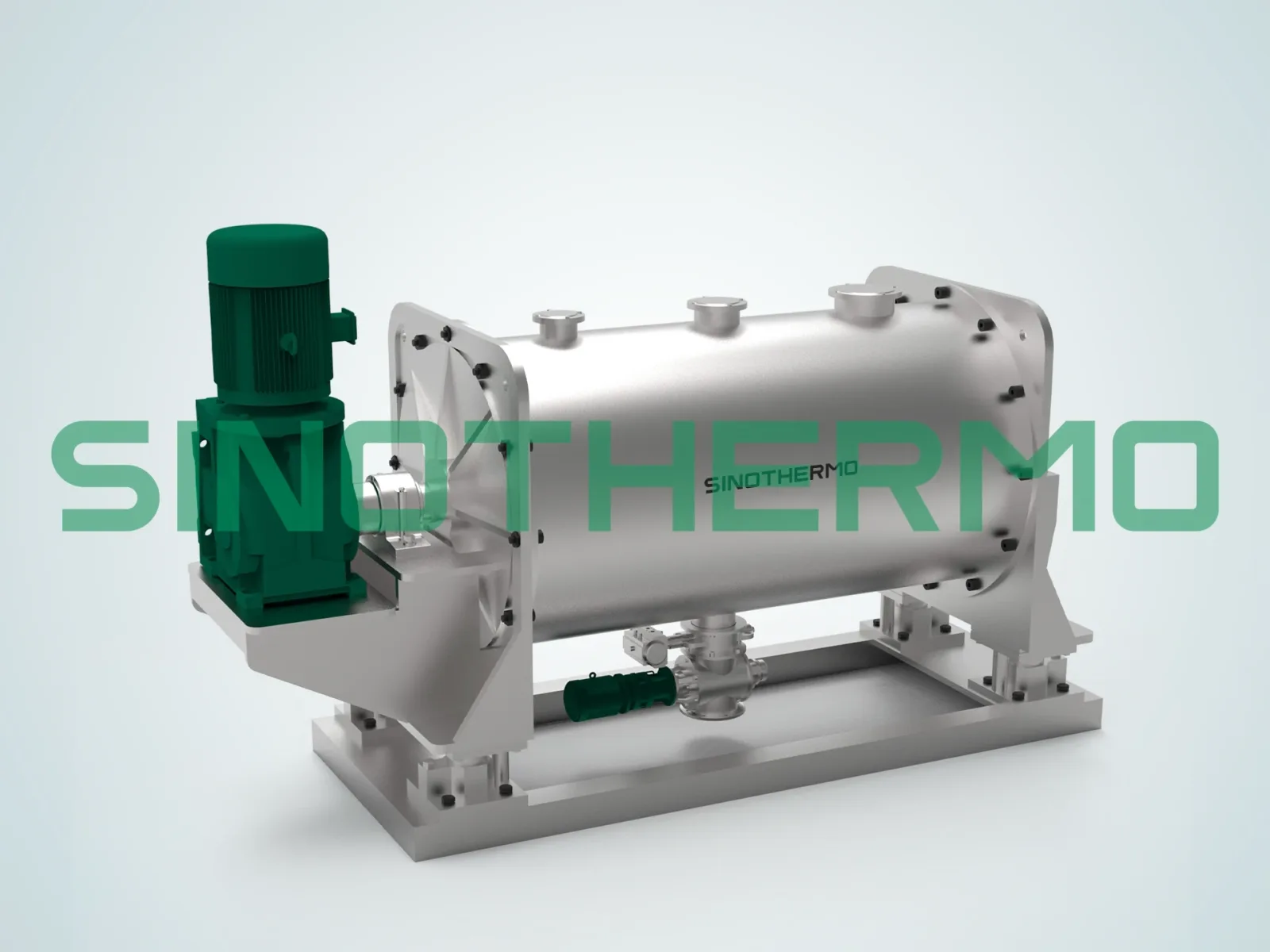
WLDH-Horizontal Ribbon Mixer
Categories: Mixer, Horizontal Mixer, Ribbon Blender
Equipped with Horizontal Screw Belts:
The Horizontal Ribbon Mixer offers efficient material blending. Its cylinder holds a shaft with surrounding ribbon belts that rotate at equal speed: the outer belts move material from both ends toward the center while the inner belts move it from the center back out, folding the batch together for thorough mixing.
- Input:
- Powders, Granules, Small amounts of liquid
- Type:
- Dry Mixing, Mild Wet Mixing
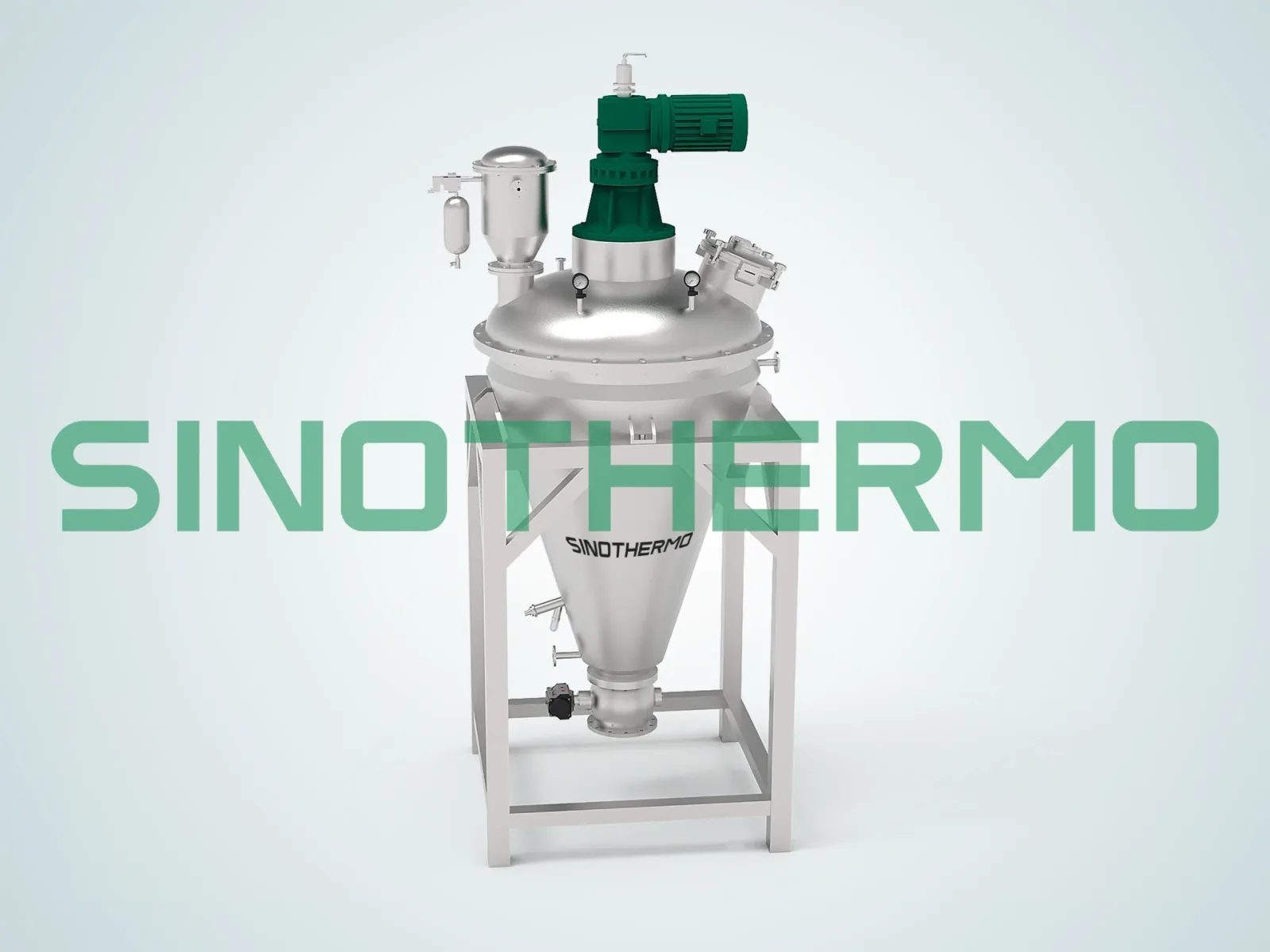
DLH-Conical Ribbon Screw Blender
Categories: Mixer, Conical Mixer, Ribbon Blender, Screw Mixer
Equipped with Rotating Spiral Belt:
A screw encased in a ribbon rotates simultaneously to create a swirling motion, lifting material upward in a spiral from the base of the cone before it descends by gravity. Optional features such as spray atomization and jacket heating or cooling are also available.
- Input:
- Solids, Powders, Granules, Liquids
- Type:
- Dry Mixing, Wet Mixing
- Additional Features:
- Humidifying, Drying, Cooling
Frequently Asked Questions
How does a ribbon blender work?
Inner and outer helical ribbons on a horizontal shaft move material in both directions at once, toward the center and outward, for fast, uniform blending of dry powders and granules.
What ribbon blenders does SINOTHERMO offer?
The WLDH horizontal ribbon mixer, and the DLH conical ribbon screw blender, which adapts the ribbon principle to a tapered vessel for faster discharge.
Why does ribbon blending suit dry powders?
Dual-direction movement blends the whole batch quickly without dead zones at the vessel ends, and low shear keeps friable granules and coated particles intact.
Can they add liquid?
The WLDH takes small amounts of liquid for mild wet mixing. The DLH handles liquids for wet mixing, with humidifying, drying and cooling features.
Can I test my material before buying?
Yes. SINOTHERMO's testing lab runs paid pilot trials and reports parameters, powder properties and samples.
Inner and Outer Helical Ribbon Agitation
The WLDH horizontal ribbon mixer uses inner and outer helical ribbons on a single shaft to move material simultaneously toward the center and outward, while the DLH conical ribbon screw blender adapts the ribbon principle to a tapered vessel for faster discharge.
Why Ribbon Blending Works for Dry Powders
Dual-direction movement blends the full batch quickly without dead zones at the vessel ends. Low shear keeps friable granules and coated particles intact during blending. Suited to continuous or batch dry-powder blending across chemicals, food and feed applications.